



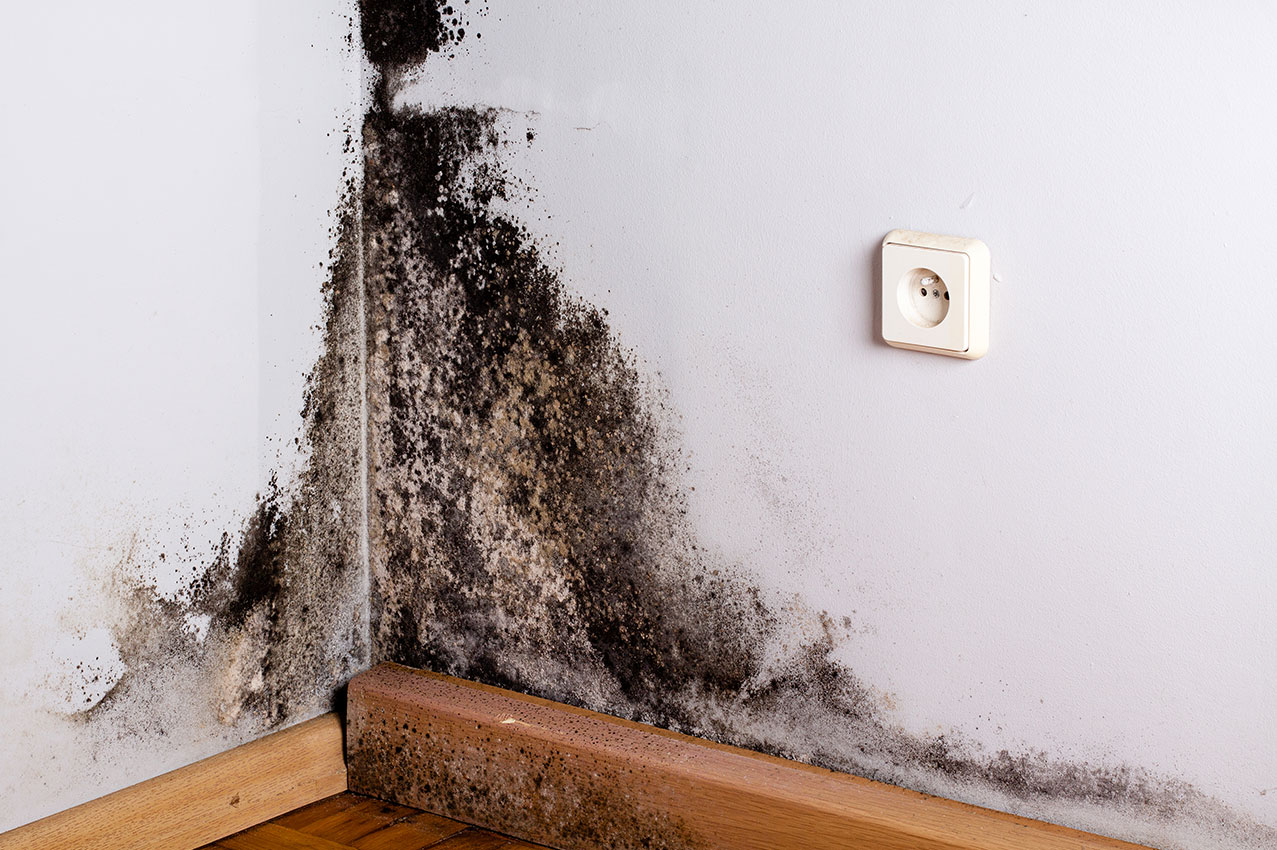

If you notice any damp within your property, the source must be identified in order to suggest the best method of dealing with and further preventing the problem. Some types of damp will only be apparent following changes to internal finishes, weather or temperature, ie redecorating emulsion painted walls with vinyl paints or wallpaper, damp caused/worsened by heavy rainfall/driving rain, condensation caused by reduced temperatures. This is why it is important to have a damp survey carried out on a property that you may not be familiar with but may be interested in purchasing.
There are four main sources of damp which can cause a detrimental effect to the internal finishes and structure within a property:
Rising Damp
Rising Damp can affect both internal and external walls. It is caused by moisture from the ground rising up through the capillaries in the mortar beds. In most cases rising damp will only affect up to approx 250-300mm from external ground level although this must be tested as it has been known to reach over a meter high when there are high levels of ground pressure present. Rising damp usually leaves behind a band of salts on the internal finishes which are brought up from the earth and remain once the moisture has dispersed.
Penetrating Damp
Penetrative damp is caused by moisture passing through the construction of a property. In most causes penetrative damp is caused by high ground level, whether this is due to a raised external path that has been introduced at a later stage of construction or an existing ground level when properties have been built into a banking or road side etc. Penetrative damp will always affect internal rooms that are below ground level ie basements/cellars unless they have received treatment. Penetrative damp can also be present when a property has a closed cavity, or when construction causes the cavities to be breached ie rubble filled cavities, English bond construction, through stones etc. When investigating the cause of penetrative damp any possible leak should also be ruled out.
Condensation
Condensation is caused by the relative humidity within the air, relative humidity is increased by basic living needs such as bathing, washing, cooking and cleaning. In basic terms when the air within a property hits a cold surface such as a glass window or a cold wall, the air is slowed down and is allowed to turn back into moisture.
When left untreated condensation can leave behind unsightly black spot mould and creates a fusty smell. When there are only small levels of condensation the problem can be improved by increasing air flow ie moving furniture away from walls and opening windows, however where this is not possible or where condensation levels are high there are other solutions available.
Leaking Pipework
Leaking pipework may not be immediately obvious where pipes are concealed, however this should not be ruled out as a possible cause until investigated further.
Damp Report
Whilst all the above can sometimes be easily identified, an independent damp surveyor can assess whether there is more than one problem affecting an area and can confirm suspicions using moisture meters, hygrometers and speedy carbide testing. Our damp reports explain the type of damp, the cause of damp and the best remedial action for preventing and treating the damp. Also included are full colour photographs illustrating the findings, where required.
Some of the causes of damp can be prevented and treated with simple solutions and do not always require expensive remedial action, all methods of treatment are included in our reports giving you different options for you to consider as well as our personal recommendations and reasons why.
The reports are written in a comprehensible manner.
Services & Fees
Find out more about the services we offer, and the service fees.